
GLP-1 Protocols.
Physician-guided peptide therapy for appetite regulation, metabolic reset, and sustainable body composition. Discreet, personalized, and administered with the same white-glove standard.
Shipped discreetly to your door — anywhere in Florida.
Miami to Jacksonville, Tampa to the Keys. Physician-reviewed, dispensed by state-licensed U.S. pharmacies, and delivered in temperature-controlled packaging. No clinic visit, no waiting room — your protocol arrives where you are.
Semaglutide
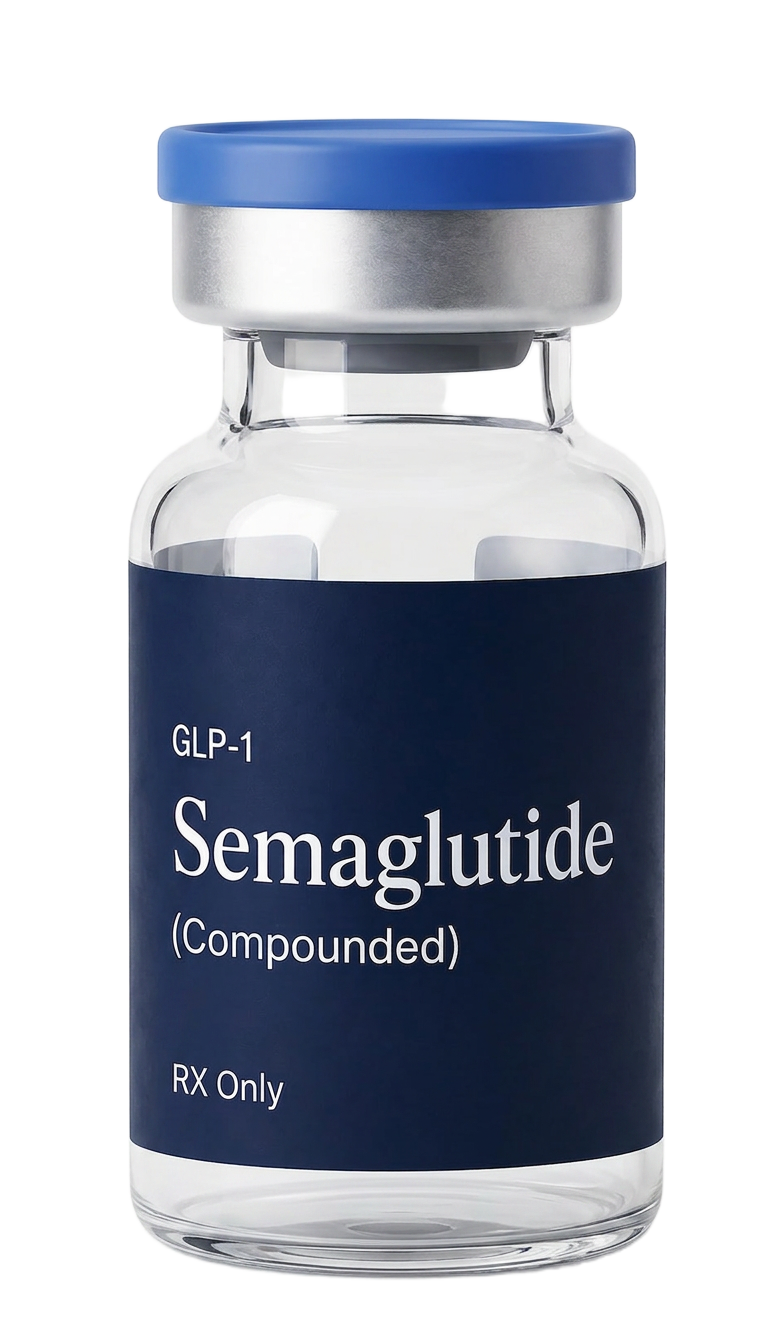
GLP-1 receptor agonist. Compounded medication available by prescription for eligible patients following physician evaluation. All strengths available.
Compounded semaglutide is not FDA-approved. FDA does not review compounded medications for safety, effectiveness, or quality before they are marketed.
- Physician consultation included
- All dose strengths
- Monthly supply & supplies
- Text-based nurse support
Tirzepatide
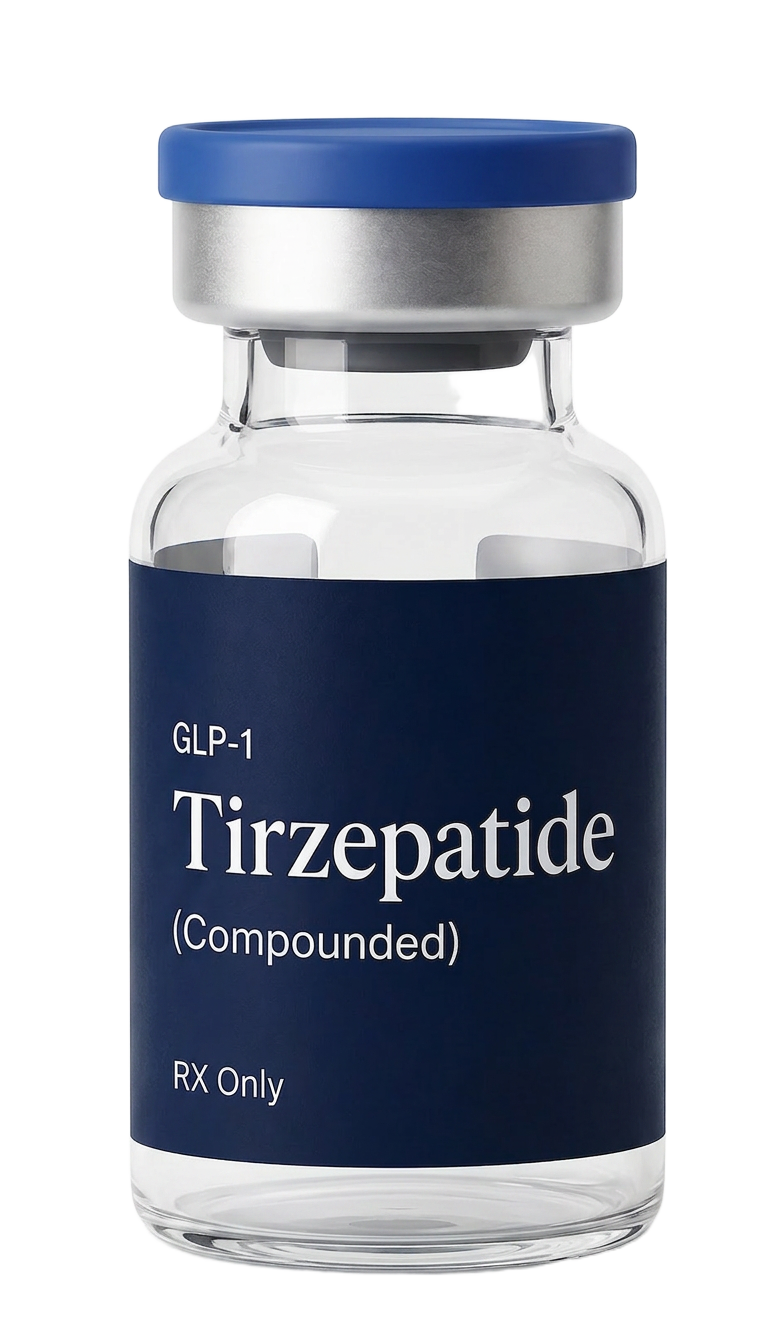
Dual GIP/GLP-1 receptor agonist. Compounded medication available by prescription for eligible patients following physician evaluation. All strengths available.
Compounded tirzepatide is not FDA-approved. FDA does not review compounded medications for safety, effectiveness, or quality before they are marketed.
- Physician consultation included
- All dose strengths
- Monthly supply & supplies
- Text-based nurse support
1. Complete a brief medical intake.
2. Physician reviews & approves protocol.
3. Ongoing monitoring & dose adjustments.
No appointment to schedule — GLP-1 protocols are physician-reviewed and shipped to your door.
How these medications work.
Both protocols belong to a class of medications called incretin therapies. Incretins are hormones your gut naturally releases after eating. They signal the pancreas to release insulin when glucose is elevated, slow how quickly the stomach empties, and communicate fullness to the appetite centers of the brain. Prescribed peptide therapy extends that natural signal across the full week.
Semaglutide
- Acts on the GLP-1 receptor only.
- Slows gastric emptying, so meals feel satisfying for longer.
- Reduces appetite signaling and the mental preoccupation with food.
- Once-weekly subcutaneous injection with a gradual dose titration.
- The longest real-world prescribing history of the two.
Often selected by patients new to peptide therapy, or those who prefer the most established option and a measured, conservative titration.
Tirzepatide
- Acts on both the GIP and GLP-1 receptors.
- GIP activity additionally influences how the body handles fat and stores energy.
- Same weekly injection rhythm, with its own titration schedule.
- Some patients report smoother appetite control at comparable dosing.
- A newer molecule with a shorter, though rapidly growing, clinical record.
Often selected by patients seeking a second pathway of support, or those who have previously plateaued on single-pathway therapy.
Dosing begins low and increases gradually over weeks. Most patients notice reduced appetite and smaller portion sizes within the first several weeks. Progress is steady rather than sudden by design.
Nausea, fullness, constipation, reflux, or fatigue — most often early in therapy or after a dose increase, and typically easing as your body adjusts. Slow titration exists to minimize this.
Prioritize protein, hydration, and resistance training to preserve lean muscle. Your physician monitors tolerance and adjusts dosing rather than pushing escalation on a fixed timeline.
There is no universally superior option — the right protocol depends on your medical history, tolerance, prior experience with peptide therapy, and your goals. Your Florida-licensed physician reviews your intake and recommends a starting protocol and dose; patients can transition between protocols under physician guidance if tolerance or response warrants it.
GLP-1 therapy is available exclusively to patients who are physically located in the State of Florida at the time of consultation and treatment, in accordance with Florida telehealth and prescribing regulations. Eligibility is determined solely by a licensed Florida physician following a comprehensive medical evaluation, review of personal and family medical history, and clinical criteria including qualifying BMI. Therapy is not appropriate for individuals with a personal or family history of medullary thyroid carcinoma, Multiple Endocrine Neoplasia syndrome type 2 (MEN 2), pancreatitis, certain gastrointestinal conditions, or who are pregnant, breastfeeding, or planning pregnancy. Medications are dispensed by state-licensed U.S. pharmacies, including FDA-registered 503A and 503B compounding facilities. Individual results vary. This information is educational and does not constitute medical advice; no physician-patient relationship is established until an evaluation is completed and treatment is formally accepted.
Book your infusion.
Choose your date and time, tell us where to meet you, and your appointment is confirmed instantly — no waiting on a call back.